先读懂日期,再读懂数量
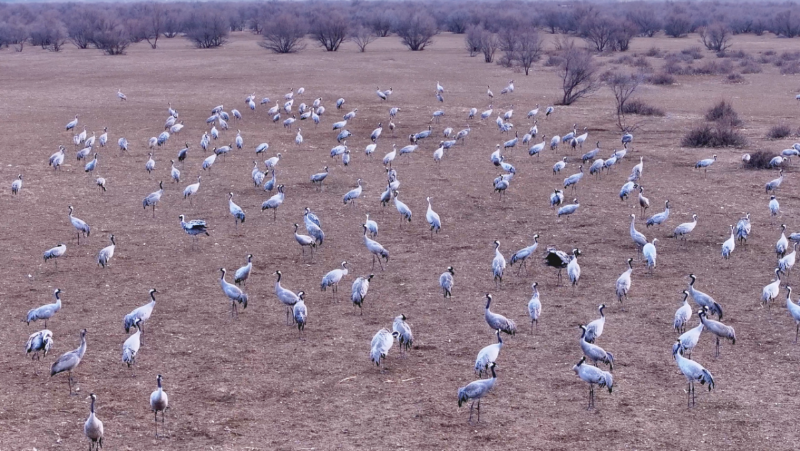
报道发布于9月20日,核心监测发生在9月15日:3000余只灰鹤集结,4只白鹤和2只白头鹤混在其中,东方白鹳记录超过100只。当地灰鹤自9月10日起陆续抵达,说明这是一段迁徙过程中的阶段快照。
鹤群会随天气、水位、食物和干扰移动。出发前应重新查看保护地和当地林草部门公告;不要把一周前的数量写成今天仍在,也不要根据社交平台照片倒推精确落点。
大群中怎样找白鹤和白头鹤
先用双筒镜确认主体灰鹤:整体灰色,头颈有黑白对比,成鸟头顶可见红色裸皮。再用单筒望远镜分区扫描。白鹤成鸟几乎通体白色,飞行时黑色初级飞羽醒目,脸部裸皮偏红;白头鹤身体深灰至黑,头颈大面积白色。
东方白鹳体型同样很大,但静止时长而粗的黑嘴、白体黑翼与鹤类轮廓不同,飞行时颈部伸直。逆光、热浪或距离过远时只记录为“鹤类未定”或“大型涉禽未定”,不要以稀有程度替代证据。
让鹤群只起飞一次:按它们自己的时间
迁徙停歇期需要持续觅食和休息。不要越过围栏或巡护线,不驾车压近、不鸣笛、不播放声音、不用无人机制造群飞画面;若鹤群连续警戒、步行远离或整体起飞,应立即后退并结束观察。
只分享县域或保护地级范围,稀有鹤类的精确混栖点、夜栖地和稳定觅食地延迟且模糊发布。志愿巡护正在劝阻惊扰行为,现场人员指令与临时封闭始终高于网络攻略。
Read the date before the numbers
The report appeared on September 20, but its key monitoring date is September 15: more than 3,000 Common Cranes, four Siberian Cranes and two Hooded Cranes in the flock, plus over 100 Oriental Storks. Common Cranes had been arriving since September 10, so this is a stage in an ongoing migration.
Flocks move with weather, water, food and disturbance. Recheck forestry and protected-area notices before travel. Never present a week-old count as today's total or reverse-engineer a precise pin from social-media photographs.
Finding Siberian and Hooded Cranes in a large flock
First establish the Common Crane majority: mainly grey, with a strongly patterned black-and-white head and neck and, on adults, a red crown patch. Then divide the flock into sections with a scope. Adult Siberian Crane is largely white with black primaries conspicuous in flight and reddish bare facial skin; Hooded Crane has a dark body and extensively white head and neck.
Oriental Stork is equally large but shows a long heavy black bill and a white body with black wings, giving a different standing outline. It also flies with the neck extended. In backlight, heat haze or great distance, retain 'unidentified crane' or 'unidentified large waterbird' rather than using rarity as evidence.
Let the cranes choose when to fly
Migrants need uninterrupted feeding and rest. Do not cross barriers or ranger lines, drive closer, honk, use playback or launch a drone for a flock shot. Retreat and end the watch if cranes stay alert, walk away or lift off as a group.
Share only county- or protected-area-level locality. Delay and generalize the exact mixed-flock, roost and dependable feeding site. Volunteer patrols are actively preventing disturbance, and every closure or ranger instruction overrides an online guide.