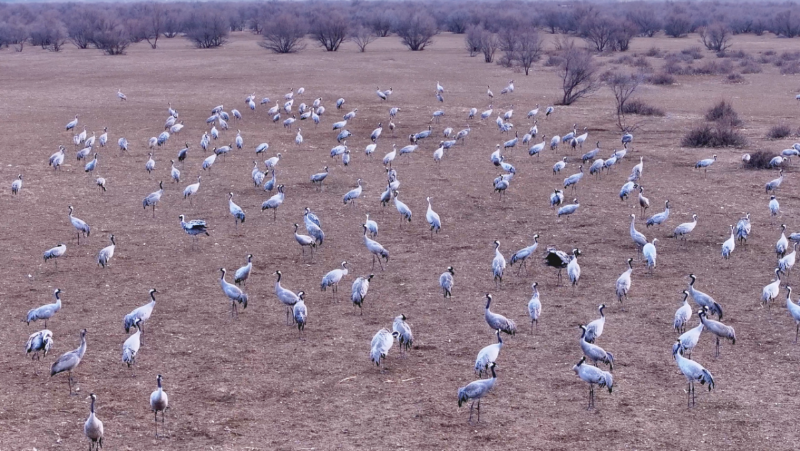
美景推荐不是实时鸟点清单
官方文章以秋日湿地体验为主,提到候鸟、晨曦、池杉和落日等景观,但并未承诺某一公园、某一时段一定出现指定鸟种。它适合用来选择季节和环境,不应被改写成稀有鸟实时位置。
出发前另查目标湿地的官方开放、预约、交通、天气和水位信息;到场若入口关闭、步道施工或管理人员调整线路,立即采用备选路线。网络照片的拍摄时间和地点也不能代替当天公告。
半日路线只做三段
第一段在开放入口附近记录天气、风、能见度和人流;第二段沿一条固定公共步道慢行,依次扫描开阔水面、芦苇边和林缘;第三段在观景平台停留,再沿原路返回。假期人多时,短而可重复的路线比追逐鸟群更可靠。
每个停点记录起止时间和观察方式。没有看到预期鸟种时保留零记录,并注明拥挤、逆光、噪声或封路等探测限制,不通过回放或进入植被补齐清单。
晨昏观鸟先解决安全与距离
清晨和落日前后光线变化快,要预留返程,使用防滑鞋和小型照明;不在无护栏水边、湿滑木栈道或视线差的岸坡逗留。车辆只在合法位置上下客,不因发现鸟而临停。
在人流与鸟群之间留出空间。鸟反复警戒、停止取食、游离岸边或整体起飞时说明距离过近;立即后退,不追拍、不投喂、不飞无人机,也不公开夜栖点或稳定停歇面。
A scenic guide is not a live bird-pin list
The official article promotes autumn wetland experiences—migratory birds, dawn, cypress and sunset—but does not promise a named species at a particular park or time. It helps select season and setting; it must not be republished as a live rare-bird location.
Separately check official opening, reservation, transport, weather and water-level information for the chosen wetland. If an entrance closes, a path is under works or staff redirect visitors, use the alternative immediately. An online photograph's date and location never replace a current notice.
Build a half day from three segments
First, log weather, wind, visibility and visitor pressure near the open entrance. Second, walk one fixed public path slowly, scanning open water, reed edge and woodland margin in sequence. Third, pause at a formal platform and return by the same route. During a holiday, a short repeatable route is more reliable than chasing flocks.
Record start and end time plus observation method at every stop. Keep zero records and note crowding, backlight, noise or closure as detection limits. Never use playback or enter vegetation to complete a checklist.
Solve safety and distance before dawn or dusk birding
Light changes quickly around dawn and sunset. Allow time to return, wear grippy footwear and carry a small light. Do not linger on unguarded water edges, slick boardwalks or poorly visible banks. Use only legal pickup points and never stop a vehicle suddenly for a bird.
Leave space between visitors and birds. Repeated vigilance, stopped feeding, movement away from shore or a whole-flock takeoff means you are too close. Retreat at once; do not chase, feed or fly a drone, and never publish roosts or dependable resting flats.