官方救护记录确认了什么
国家林草局9月15日消息显示,9月4日蓟州区有关部门接到村民求助,专业人员确认无法飞行的大鸟为黑鹳亚成体。检查记录显示其体重2.3公斤、体质偏弱,翅膀和腿部有擦伤,接受补液与清创后进入野化恢复阶段。
这条记录说明发现者及时报警和专业机构接手的重要性,但不代表普通人可以自行捕捉、喂养或选择放归地点。是否适合放归,要由救护人员根据体能、伤情和野外生存能力判断。
怎样从远处辨认亚成体黑鹳
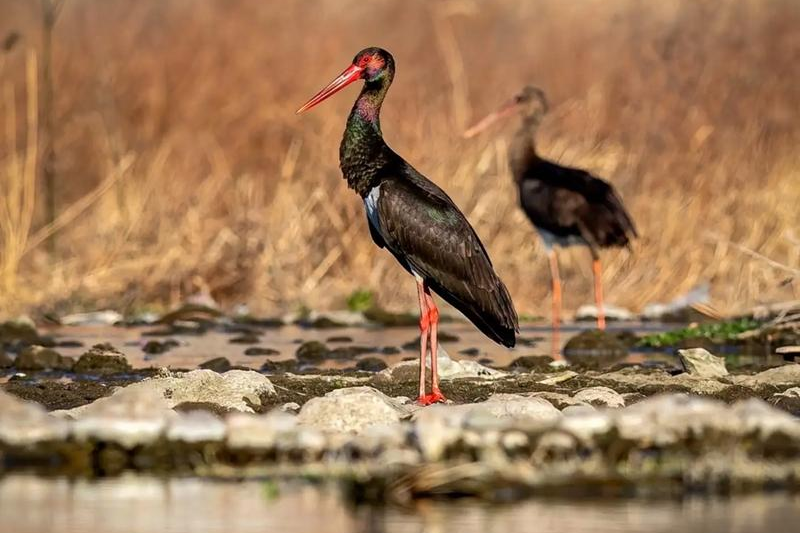
成年黑鹳多呈带金属光泽的黑色上体、白色腹部,成鸟嘴和腿鲜红;幼鸟或亚成体颜色更暗淡,嘴腿可能呈灰绿或暗色。与东方白鹳相比,黑鹳的身体主体更暗,白色主要集中在腹部。
受伤、羽毛污染、逆光和距离都会改变外观。不要为了确认鸟种围堵、翻动翅膀或强行站立;先把记录写成“大型鹳形鸟疑似受伤”,由专业人员现场确认更安全。
现场处置的四步顺序
先疏散人群和犬只,关闭闪光灯与无人机,在安全距离观察其是否能站立、行走和短距离移动;随后记录时间、大致地点、明显伤处和危险来源,用一张不带精确定位的全身照片协助判断。
联系当地林业、公安或野生动物救护机构,不强行喂水、喂鱼、上药或长途转运。若专业人员要求临时看护,使用通风纸箱、弱光和安静环境,并隐藏发现点,避免围观者二次干扰。
What the official rescue record confirms
The NFGA update of September 15 says authorities in Jizhou received a resident's call on September 4 and professionals identified the flightless large bird as a juvenile Black Stork. It weighed 2.3 kilograms, was weak and had abrasions on the wings and legs before receiving fluids, wound care and rehabilitation.
The case demonstrates the value of prompt reporting and qualified care. It does not authorize a member of the public to capture, feed or choose a release site. Fitness, injuries and survival ability must be assessed by trained rescuers before release.
Recognising a juvenile Black Stork from distance
An adult Black Stork has mostly dark upperparts with metallic gloss, a white belly and bright red bill and legs. Juveniles are duller and may show grey-green or dark bill and legs. Compared with an Oriental Stork, the body is predominantly dark and the white is concentrated below.
Injury, dirty plumage, backlight and distance distort colour. Do not surround a bird, spread its wings or force it upright to settle identification. Record a 'possibly injured large stork-like bird' and let professionals confirm it.
A four-step response
Move people and dogs away, stop flash and drones, and observe from a safe distance whether the bird can stand, walk or move briefly. Note time, broad locality, visible injury and the hazard, and take one full-body image without precise location data if useful.
Contact local forestry, police or wildlife rescue. Do not force water, fish, medicine or long transport. If an expert requests temporary holding, use a ventilated cardboard box, low light and quiet, and withhold the discovery point to prevent a second wave of disturbance.