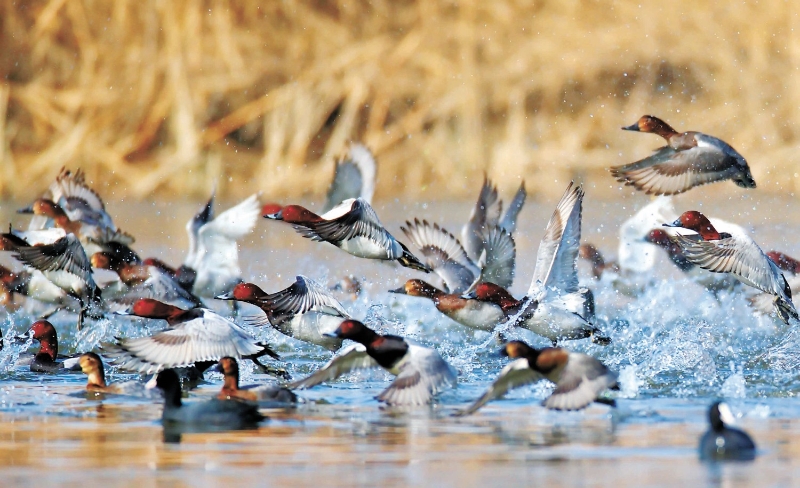
为什么9月会出现大群小䴙䴘
名城苏州9月11日报道,生态环境部江苏太湖(湿地)生态质量综合监测站人员在渔洋山附近一次观察到50多只小䴙䴘。报道解释,5月至7月繁殖后,当年幼鸟到9月已能自行捕食,家庭群开始合流。
9月也是小䴙䴘换羽期,飞行能力会受到一定影响,充足的小鱼小虾与开阔安全水面有利于集群。大群是多个季节因素叠加的记录,不代表每天、每个岸段都能看到同样数量。
小䴙䴘和四种鹭怎样辨识
小䴙䴘体形小、尾部不明显,常贴近水面游动后突然潜水;换羽和幼鸟阶段颜色较淡,不要只凭脸部色块判断。白鹭体形较小、黑嘴黑腿而脚趾常偏黄;大白鹭体形明显更大、颈长,嘴和腿色会随季节变化。
中白鹭体形介于两者之间,辨识时同时看体形、颈部比例和嘴裂长度。池鹭停栖时褐色斑驳,飞起后白色双翼非常醒目。报道还记录太湖吴中段百余只鹭鸟集结,远距离拍摄后再复核比靠近鸟群更可靠。
怎样观察换羽和迁徙准备中的水鸟
选择公开岸线的固定视角,用8至10倍双筒镜或单筒望远镜扫描水面;不要乘船接近、放无人机、鸣笛或投食。小䴙䴘在换羽期机动能力受限,更应给群体保留远离岸线的安全水域。
记录时间、天气、风向、群体大致数量和行为即可,不公布监测站设备位置或鸟群实时点位。遇到连续潜逃、整体游离或鹭群起飞,应立刻后退;湖风、雷雨或能见度下降时把人身安全放在记录之前。
Why Little Grebes form a large September flock
Mingcheng Suzhou reported on September 11 that staff from the Ministry of Ecology and Environment's Jiangsu Taihu wetland monitoring station counted more than 50 Little Grebes near Yuyangshan. After the May–July breeding season, young birds can feed independently by September and family parties begin to merge.
September is also a moulting period, with flight capacity reduced to some extent. Abundant small fish and shrimp and open, secure water support aggregation. The count combines several seasonal factors; it does not mean the same number appears daily or on every shore.
Identifying a grebe and four herons
Little Grebe is small and virtually tailless, swimming low before sudden dives. Moulting and young birds can look pale, so avoid relying on one facial patch. Little Egret is small with a dark bill and legs and often yellowish toes; Great Egret is much larger and longer-necked, with bill and leg colours changing by season.
Intermediate Egret falls between them; combine size, neck proportions and gape length. Chinese Pond Heron is mottled brown at rest but flashes conspicuous white wings in flight. The report also describes more than 100 herons in the Wuzhong section; review distant photographs rather than approaching the flock.
Watching waterbirds during moult and migration preparation
Choose a fixed public-shore viewpoint and scan with 8–10× binoculars or a scope. Do not approach by boat, fly drones, sound horns or provide food. Because Little Grebes are less mobile during moult, preserve a broad escape zone away from shore.
Record time, weather, wind, approximate flock size and behaviour without publishing monitoring equipment or a live flock pin. Step back after repeated escape-diving, collective retreat or a heron flush. Human safety takes priority when wind, thunderstorms or visibility worsen.