这次集群记录怎样理解
陕西省林业局转载的报道指出,秦岭北麓近期出现成群朱鹮。每年7至9月是野生朱鹮游荡期,亲鸟会带当年出巢幼鸟练习飞行、熟悉周边生境并逐渐融入群体。
这是一项季节行为记录,不是某个点位每天都有同样数量的承诺。朱鹮会随水位、农事、天气和干扰改变活动范围,观鸟者不应追逐鸟群或守堵其往返路线。
成鸟与幼鸟怎样看
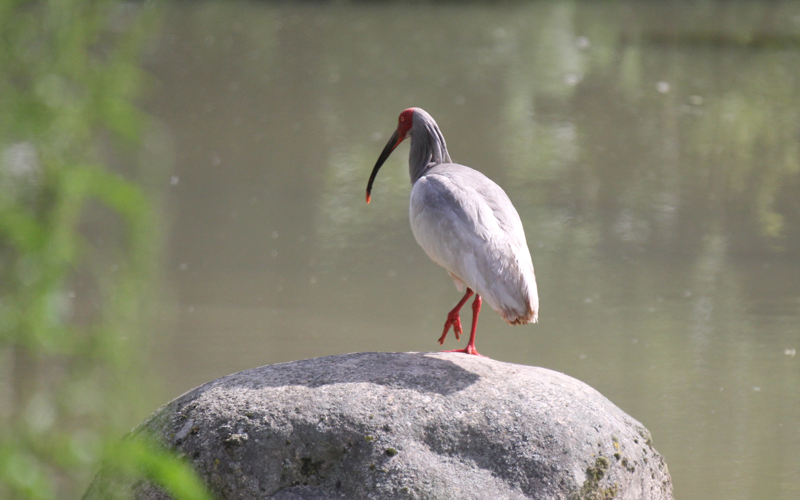
朱鹮有长而下弯的黑色嘴、红色面部裸皮和粉白羽色,飞行时宽翼与伸直颈部较醒目。幼鸟整体色调和裸露部位可能较暗,需结合体形、嘴形和飞行姿态判断。
清晨或傍晚可在公开区域使用8至10倍双筒镜或长焦观察。不要靠近落脚树、驱鸟起飞、播放声音或投食;鸟群连续警戒、转移或改变进食即表示距离过近。
位置分享与团队边界
只发布县域或公开景区级地点,删除照片定位数据,延迟分享敏感记录。夜栖树、当年巢址、幼鸟稳定活动地和固定觅食田块均不应在社交群公开。
司机和向导应使用合法停车点,不占农路、不进入保护地封闭区,并服从巡护人员管理。朱鹮为国家一级保护野生动物,观察和摄影必须让其正常取食与休息优先。
How to read the flocking report
The Shaanxi Forestry report says groups of Crested Ibis have recently been observed along the northern Qinling foothills. July through September is a dispersal season when adults lead this year's fledglings through flight practice, habitat learning and gradual flock integration.
This is a seasonal behaviour report, not a promise of the same number at one point every day. Water, farming, weather and disturbance shift ibis movements; birders must not chase a flock or block its commuting route.
Adults, juveniles and viewing distance
Crested Ibis has a long down-curved black bill, red facial skin and pinkish-white plumage, with broad wings and an extended neck in flight. Juveniles may look duller, so use structure, bill shape and flight profile together.
Watch from public areas with 8–10× binoculars or a telephoto lens around dawn or dusk. Never approach a landing tree, flush birds, use playback or feed them. Repeated vigilance, relocation or interrupted feeding means you are too close.
Location privacy and group conduct
Share only county- or public-attraction-level locations, strip geotags and delay sensitive observations. Never publish roost trees, current-year nests, predictable juvenile sites or dependable feeding fields in social groups.
Drivers and guides should use legal parking, keep farm roads clear, stay outside closed protected areas and follow rangers. As a nationally Class I protected species, the ibis's uninterrupted feeding and rest always outrank photography.