观察记录为什么重要
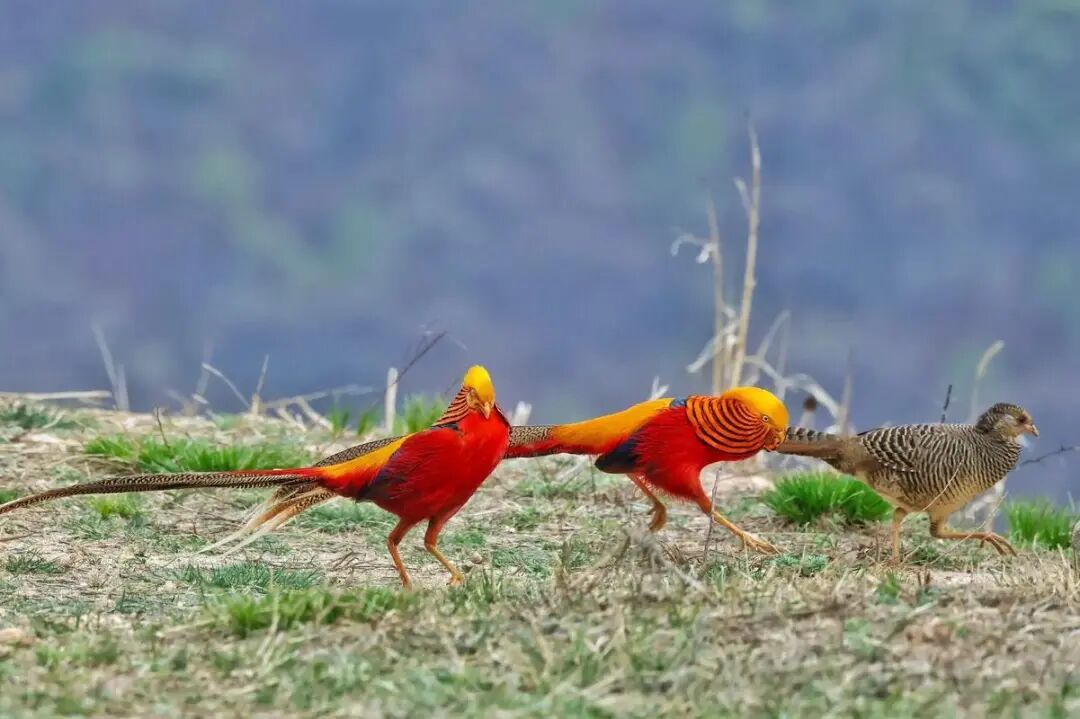
陕西省林业局7月31日报道记录到血雉亲鸟带幼鸟在草丛活动,并观察到勺鸡。报道指出,两类鸟对栖息环境要求高,偏好植被原生性好、森林郁闭度适宜且人为干扰较少的林区。
这类家庭群记录说明繁殖季尚未完全结束。即使幼鸟已经能够行走或短距离飞行,亲鸟仍在警戒和引导;观鸟者不应靠近、围堵或尝试把它们赶到无遮挡位置。
怎样做初步辨识
血雉体型较小而紧凑,常在高海拔林下和灌丛地面活动,雄鸟具有醒目的红色面部与身体斑纹;雌鸟更隐蔽。勺鸡体型更大、尾较长,雄鸟头颈图案明显,常在林下缓慢行走。
两者都可能在发现人后迅速钻入灌丛。不要用叫声回放迫使它们现身;远距离记录体型、步态、羽色和活动生境即可。照片无法确定时保留为“雉类未定”,比追入林下更负责任。
秦岭秋初观察规则
只走依法开放步道,服从防火、天气和保护区管理要求。清晨低声慢行,转弯或陡坡处给鸟留出退路;不要在幼鸟活动区停留聚集,也不采集羽毛、食物或植被。
本文故意不提供记录地点、海拔和坐标。发布家庭群照片时删除地理信息,延迟分享并仅标注“秦岭区域”。若遇持续降雨、落石风险或临时封闭,应取消观察而不是绕行进入非开放区。
Why the record matters
A Shaanxi Forestry report dated July 31 documented adult Blood Pheasants with young and also Koklass Pheasants. It notes that both depend on high-quality forest with intact vegetation, suitable canopy and very little human disturbance.
A family-group record means the breeding season is not fully over. Even mobile young still rely on alert adults for guidance. Birders must not approach, surround or push them into an exposed place.
A first identification
Blood Pheasant is compact and often walks on the ground beneath high-elevation forest and scrub. Males show conspicuous red facial and body markings; females are cryptic. Koklass Pheasant is larger and longer-tailed, with a strongly patterned male head and neck, and often moves slowly through the understory.
Both may disappear quickly into cover. Never use playback to force a view. Record size, gait, plumage and habitat from distance. Leaving a photograph as 'unidentified pheasant' is more responsible than pursuing it off-trail.
Early-autumn rules in the Qinling
Stay on legally open trails and follow fire, weather and reserve instructions. Walk slowly and quietly at dawn, leaving an escape route around bends and slopes. Do not linger around young birds or collect feathers, food or vegetation.
This article deliberately omits the observation site, elevation and coordinates. Strip geodata from family images, delay sharing and label only the broad Qinling region. Cancel for prolonged rain, rockfall risk or closure rather than detouring into a restricted zone.