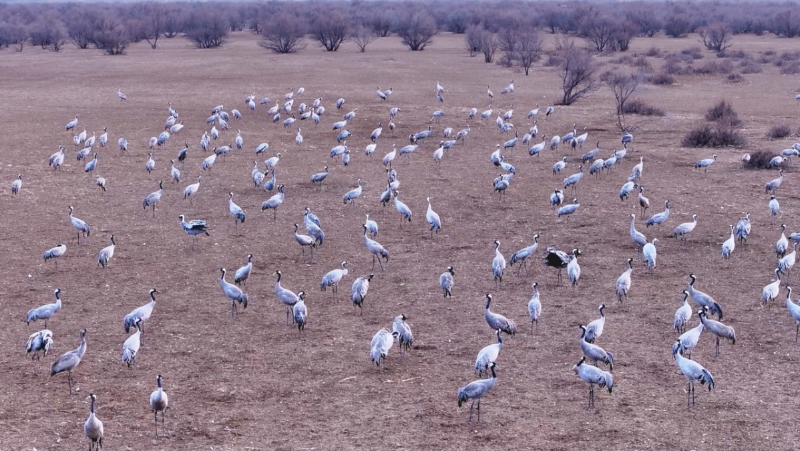
官方监测确认了什么
国家林草局9月15日发布的信息显示,9月8日南矶湿地保护区监测到7只豆雁。报道把今年越冬候鸟迁徙季提前开启与冷空气及秋季涨水后湖区生态条件改善联系起来,同时记录到白鹭、夜鹭等夏候鸟正在集结南迁。
这是一条保护区监测记录,不代表整个鄱阳湖已经进入数量高峰,也不意味着豆雁每天停留在同一水面。出发前应核实开放范围、天气、水位和官方管护安排,不按新闻画面反推具体鸟点。
豆雁怎样从远处识别
豆雁属于大型雁类,整体偏褐,头颈较深,嘴多呈黑色并带橙色带,腿呈橙色。远距离观察时先确认体型、嘴形、腿色和群体飞行轮廓,再结合叫声与同群个体比较。
豆雁类群的分类与亚种辨识较复杂,逆光、热浪和距离都会造成误判。来源只确认“豆雁”,本文不根据视频进一步判断亚种;没有清晰嘴部、翼上和体型对比证据时,记录为“豆雁类”比勉强细分更可靠。
秋涨水期的观察与安全
水位上涨会改变浅滩、草洲和可通行岸线。只使用公开观鸟平台、堤岸或获准步道,远离松软泥滩、深水边缘和临时管护线;大风、雷雨或能见度下降时及时撤离。
使用单筒望远镜代替向雁群靠近,不驱飞、不鸣笛、不投喂、不放无人机。若鸟群停止取食、集体抬头或游离岸线,应立即后退。只分享保护区级别的位置,不实时公布小群先遣鸟的精确坐标。
What the official monitoring confirms
The NFGA update published on September 15 says seven Bean Geese were monitored at Nanji Wetland on September 8. It links the early start of the winter migration season to colder air and improved lake conditions after autumn high water, while Little Egrets and Black-crowned Night Herons were gathering before moving south.
This is a protected-area monitoring record, not proof that Poyang Lake is at peak numbers or that the geese remain on the same water each day. Check access, weather, water level and official management notices before travel; never reverse-engineer an exact pin from news footage.
Identifying a Bean Goose at distance
A Bean Goose is a large brownish goose with a relatively dark head and neck, a mainly black bill usually carrying an orange band, and orange legs. Begin with size, bill shape, leg colour and flock profile, then compare calls and neighbouring birds.
Bean Goose taxonomy and subspecies identification are difficult, and backlight, heat haze and distance invite error. The source confirms only Bean Goose, so this article does not infer a subspecies from footage. Without clear bill, upperwing and size comparisons, a broader 'Bean Goose type' record is more defensible.
Watching safely during autumn high water
Rising water changes mudflats, grass islands and safe shore access. Stay on public platforms, embankments or authorized paths and avoid soft mud, deep edges and temporary management lines. Leave when wind, thunderstorms or visibility create risk.
Use a spotting scope instead of approaching. Never flush, honk, feed or fly a drone. Retreat when birds stop feeding, raise their heads together or move offshore. Share only a reserve-level locality, never a live coordinate for a small pioneer flock.