这次监测记录了什么
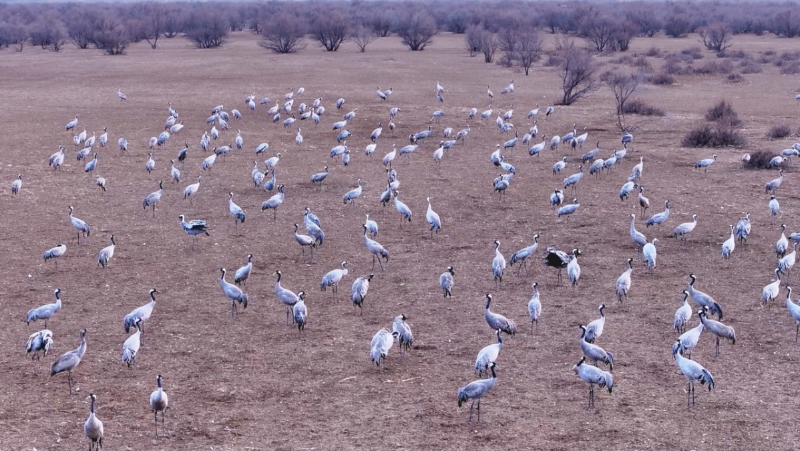
国家林草局8月31日报道称,8月9日南大港湿地监测到秋迁先头鸟群,近千只泽鹬尤其醒目,同时记录红嘴鸥、反嘴鹬等。报道预计今年秋迁候鸟在10月达到高峰。
这是保护区监测信息,不等于游客可以接近鸟群或进入其所在具体滩面。出发前应查询景区或保护地开放、预约和交通公告。
泽鹬怎样辨识
泽鹬是中大型鸻鹬,腿较长,嘴细长并略向上翘,飞行时可见明显白色腰部向背部延伸。与红脚鹬相比,泽鹬体型通常更大、腿色偏灰绿,嘴基不呈鲜明红色。
反嘴鹬有黑白羽色和明显上翘长嘴;红嘴鸥非繁殖羽头部多为白色并带耳斑。逆光、距离远或换羽期时不要仅凭单一特征下结论。
停歇地不是摄影棚
迁徙鸟在湿地补充长途飞行消耗的能量。不要靠近、驱赶、鸣笛、放无人机或用食物改变其活动。选择固定观察点,让鸟自行接近视野。
潮位、水位和天气决定鸟群位置。使用单筒望远镜比向滩涂前进更有效;精确集群点不实时公开,以免大量人员集中。
What the monitoring recorded
The NFGA report dated August 31 says early migrants were monitored at Nandagang on August 9, with nearly 1,000 Common Greenshanks especially prominent alongside Black-headed Gulls and Pied Avocets. It expects the autumn peak in October.
This is protected-area monitoring, not permission to approach the flock or enter its mudflat. Check official opening, reservation and transport notices before travel.
Identifying Common Greenshank
This is a medium-large shorebird with long legs and a slender, slightly upturned bill. In flight, white from the rump extends noticeably up the back. Compared with Common Redshank, it is generally larger, with greyer-green legs and no bright red bill base.
Pied Avocet is boldly black and white with a strongly upturned bill. A non-breeding Black-headed Gull usually has a white head with a dark ear spot. Do not identify from one feature in backlight, distance or moult.
A stopover is not a photo studio
Migrants must replace energy during a long journey. Do not approach, flush, honk, fly a drone or use food. Stay at a fixed viewpoint and let birds choose the distance.
Tide, water level and weather control flock position. A spotting scope is more effective than walking onto a flat. Do not live-share the precise aggregation point and attract a crowd.