3000余只是一轮监测,不是每日保证
来源称9月30日巡护时最先发现20余只大雁;10月12日监测时,滩区候鸟已超过3000只、20余种,首批以雁鸭类和鸬鹚为主。数字对应特定日期和巡护范围,不能理解为任何观景位置每天都能看到同样数量。
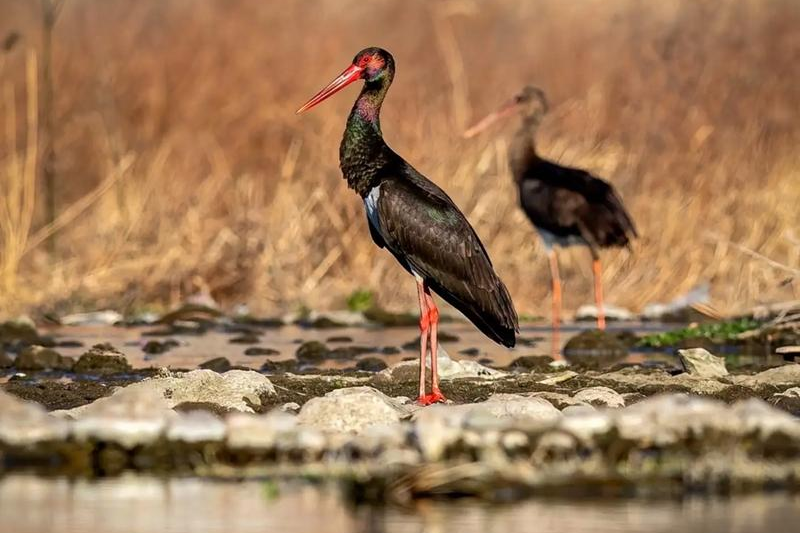
9月29日记录的3只黑鹳只作短暂停留后继续南迁。它说明东明仍是迁徙通道的重要补给地,却不是可供追逐的实时鸟点;公开记录应保留原始日期,不写成“目前仍在”。
先分群,再做区间计数
面对数千只水鸟,先把雁鸭、鸬鹚和大型涉禽分开。选择一个固定扇面,以10只或20只为单位估算小块,再按相似密度分区累加;同时记录起止时间、进入和飞离方向、可能重复的群。
来源没有公布20余种的完整名录,本文也不自行补齐。黑鹳可凭大型鹳类轮廓、黑色上体、白色下体和红色长嘴长腿辨认;逆光或距离不足时应保留为鹳类未定,并提交原图供复核。
滩区安全与鸟类福利同等重要
只在依法开放的堤岸或公共观察区使用望远镜,不开车下滩、不涉水穿越沙洲,也不沿鸟群飞行方向追车。黄河滩水位、软泥和临时生产活动都可能改变通行条件,现场封闭与巡护人员指引优先。
不使用无人机、鸣笛、投喂或回放,不公开黑鹳停歇点和夜栖位置。发现捕鸟网、伤鸟或异常死亡个体时,不自行接触或拆除,记录大致区域与时间后联系属地林业、公安或救护机构。
More than 3,000 is a survey snapshot, not a daily promise
The source says patrol staff first noted more than 20 geese on September 30. By the October 12 survey, the flats held over 3,000 migrants of more than 20 species, mainly geese, ducks and cormorants. Those figures belong to one date and patrol coverage, not every public viewpoint on every day.
Three Black Storks recorded on September 29 stopped only briefly before continuing south. Their visit shows the value of Dongming as a migration refuelling area, but it is not a live chase site. Public records must retain the observation date and never imply that the birds remain present.
Separate groups before estimating a range
For a flock of thousands, separate waterfowl, cormorants and large waders first. Fix one viewing sector, estimate a block of ten or twenty birds, then scale across zones of similar density. Log start and end time, arrival and departure directions, and possible repeat groups.
The source did not publish the full list of more than 20 species, so this article does not invent one. Black Stork can be recognized by a large stork silhouette, black upperparts, white underparts and long red bill and legs. In backlight or at poor range, retain an unidentified stork and submit original images for review.
River-flat safety and bird welfare come together
Use optics only from legally open embankments and public viewing areas. Do not drive onto flats, wade across bars or follow the flock by car. Yellow River water levels, soft mud and temporary farming activity can change access; closures and ranger instructions always take priority.
No drones, horns, feeding or playback, and no public Black Stork stopover or roost pins. If you see a net, injured bird or abnormal mortality, do not touch or dismantle anything. Note the broad area and time, then contact local forestry, police or a qualified rescue service.