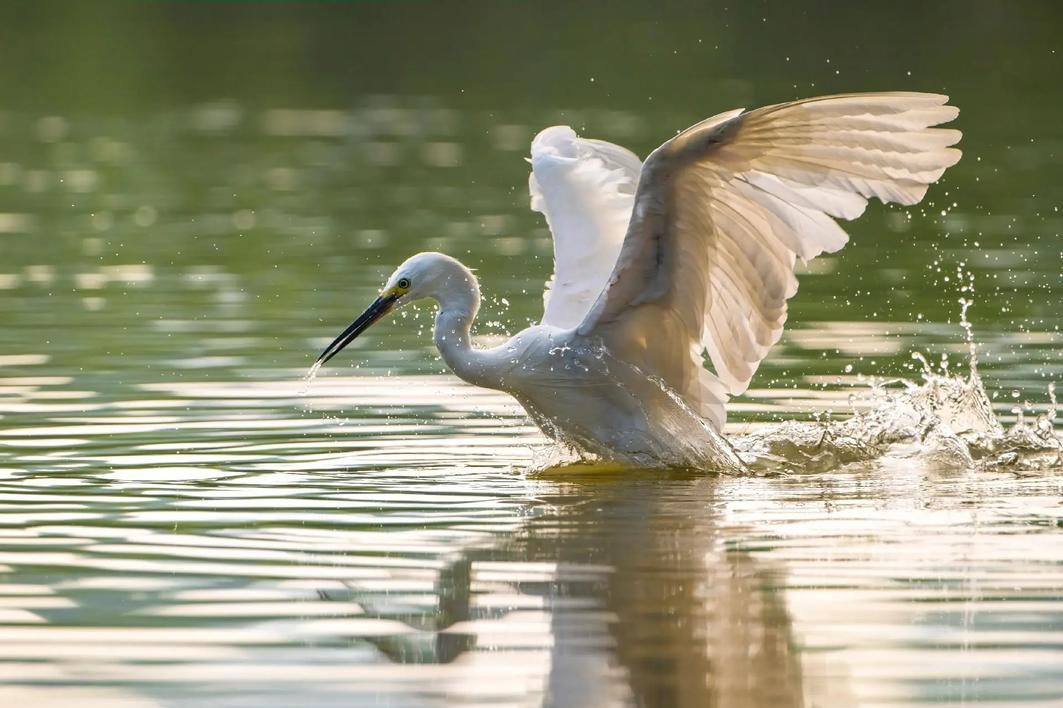
为什么河里出现小白鹭
陕西省林业局8月24日报道,经宝鸡市林业工作中心专业人员确认,金陵河浅滩活动的是小白鹭。报道指出,近两年有较多小白鹭到河畔停歇、觅食,清洁水体和充足鱼虾为它们提供了条件。
这是一条城市生态观察信息,不是固定鸟点承诺。水位、降雨、施工、行人和食物都会影响鸟的位置;只在公共步道和桥梁观察,不沿河床追寻。
小白鹭怎样辨识
成鸟全身白色,嘴细长而黑,腿黑、脚趾常呈亮黄色;捕鱼时会在浅水缓慢行走,也会快速搅动或追逐小鱼。繁殖期头后和背部可能出现饰羽。
与牛背鹭相比,小白鹭体形更修长、嘴通常黑色;与大白鹭相比明显更小,颈和嘴也较短。光线会改变腿脚颜色,远处白色鹭类无法确认时应记录为“白鹭类未定”。
城市河岸也有距离边界
停在栏杆外,用双筒镜或长焦拍摄,不下河床、不围堵浅滩、不投鱼引诱,也不要站在鸟与上游、下游退路之间。连续抬头、伸颈警戒、离开觅食点都表示需要后退。
雨后水急、河床湿滑或管理部门封闭时不要冒险进入。照片只标注“宝鸡金陵河”范围,不公布夜栖树、疑似巢址或稳定聚集点;城市便利不能成为缩短拍摄距离的理由。
Why Little Egrets are using the river
A Shaanxi Forestry report dated August 24 says Baoji forestry specialists identified the birds feeding on the Jinling River shallows as Little Egrets. Larger numbers have stopped and fed there in recent years, supported by cleaner water and adequate fish and invertebrates.
This is an urban ecology update, not a guaranteed fixed bird point. Water level, rain, works, pedestrians and prey all move the birds. Watch only from public paths and bridges, never by following them along the riverbed.
Identifying Little Egret
Adults are all white with a slender black bill, black legs and usually bright yellow feet. They walk slowly in shallows but may also stir the water or dash after small fish. Breeding birds can show head and back plumes.
Compared with Cattle Egret, Little Egret is more slender and normally black-billed; it is much smaller, shorter-necked and shorter-billed than Great Egret. Light can distort leg and foot colour, so record a distant uncertain bird simply as an unidentified white egret.
An urban river still has a distance boundary
Stay behind railings and use binoculars or a telephoto lens. Do not enter the channel, block a shallow, throw fish as bait or stand between a bird and its upstream or downstream escape route. Repeated head-raising, an extended alert neck or departure means retreat.
Never enter after heavy rain, in fast water, on slippery beds or during a closure. Label photographs only at Jinling River level and withhold roost trees, suspected nests and dependable gatherings. Easy city access is not a reason to shorten photography distance.